
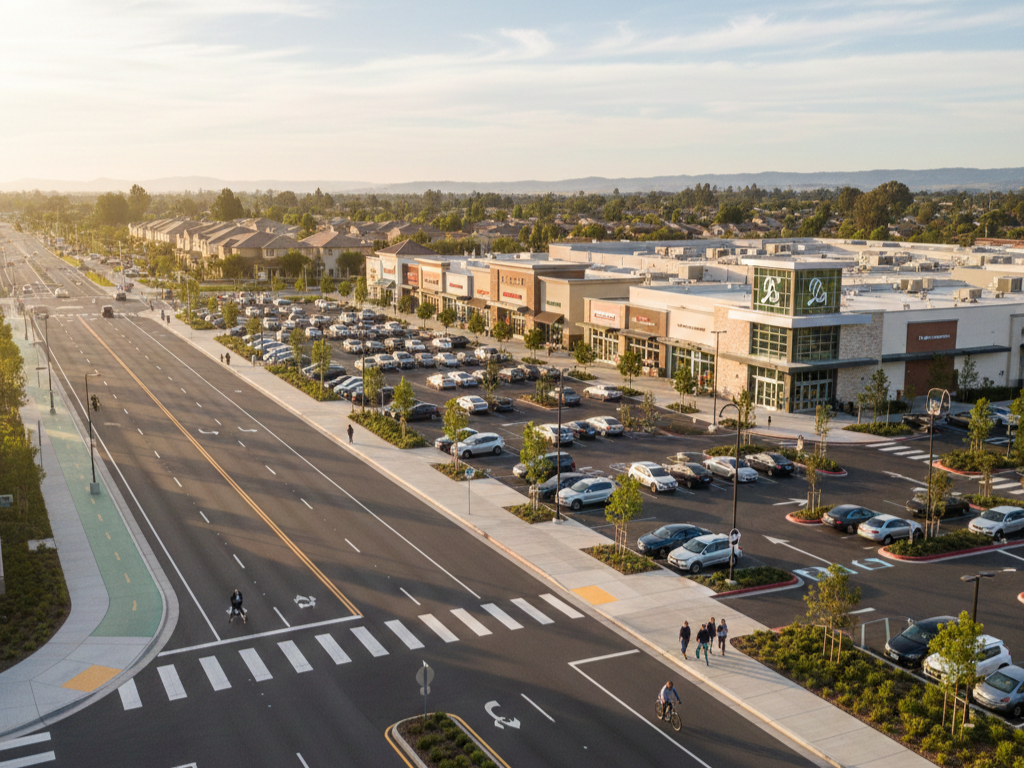
Your market list probably hasn’t gotten shorter. Your “approved site” list has.
That’s the practical reality of 2026: the constraint is usable space at workable economics. New supply remains limited and vacancy is still extremely tight, which keeps the best opportunities competitive and approval standards high. (Cushman & Wakefield)
The metro name doesn’t decide performance — the immediate area around the site does.
In practice, that’s where customers combine:
This matters more when the market is tight and a growing share of “opportunities” are second-generation space.
So the core question shifts from “Is this a good market?” to: “Does this location’s local draw produce the trips we need — and does the deal still work after reality hits?”
The story isn’t “one format wins.” It’s that quality and function matter more, and the gap between “works” and “doesn’t” keeps widening.
When vacancy is this low, the best sites get bid up — and the sites that look good on paper still get rejected if they can’t clearly support sales, staffing, buildout, and timing. (Cushman & Wakefield)
Closures can bring inventory back, but second-gen boxes often come with layout constraints, capex needs, or execution risk. That’s why “more listings” doesn’t automatically mean “more viable options” in the same local draw. (JLL)
Placer.ai’s 2025 shopping center trends show that performance varies by asset type and season — a reminder that why people go somewhere (quick errand vs browse vs occasion) is a major variable. (Placer)
Clean turns, obvious entry, fast parking, low hassle at peak. If customers have to think, you’ll feel it in conversion.
The best locations aren’t just “near grocery.” They support the same trip: grocery/value + services + food that people already combine without extra turns or extra parking lots.
Look for frequency drivers (grocery, discount, off-price, essential services). Discretionary can thrive — but it shouldn’t be the only reason people come.
“Vacancy exists” doesn’t mean “options exist.” In tight conditions, what matters is how many comparable sites exist within the same 5–10 minute drive. (Cushman & Wakefield)
Underwrite with real assumptions: buildout/TI, timeline, ramp, staffing. Prime locations can command more, but they need to pencil without hero assumptions.
Not every “busy” area works for every brand. Quick-errand zones, service-led nodes, and browse/occasion destinations favor different formats — and traffic patterns can diverge by type and season. (Placer)
Rank the immediate areas you want first, then tour only the best sites inside them.
Make it easy for internal reviewers:
Second-gen space can be compelling, but ambiguity kills deals. CBRE notes longer decision-making as tenants become more cautious; clarity on delivery condition, scope, and timeline keeps deals moving. (CBRE)
In a tight market, the pitch that wins velocity is certainty.
Build a simple Site Proof Pack (one pager + appendix) that a tenant can forward internally:
This matters because even if closures add inventory, the locations with the strongest repeat-trip patterns and few true substitutes keep commanding attention. (JLL)
In 2026, prime isn’t a market label. It’s a location that:
If you would like to discuss how your site selection needs are evolving in 2026, set up time to speak with one of our experts.
Stay informed with our expert articles and resources.
May 13, 2026
Kevin Bissell
Secondary markets are surging in retail viability. This blog explores drivers behind the shift and what it means for retailers, landlords, and municipalities tapping into opportunity.
Read More
.svg)

May 13, 2026
Kevin Bissell
Retailers arriving at ICSC Las Vegas 2026 have real expansion budgets — but every site now requires independent validation. Kevin Bissell shares what insiders know that most attendees don't.
Read More

May 13, 2026
Kevin Bissell
Read about how to use predictive analytics to streamline decisions, reduce risk and maximize performance.
Read More
© 2026 CRE360 Partners. All rights reserved.
.png)
