We help Ohio municipalities, economic development authorities, and redevelopment agencies attract retail investment by producing the trade area research and sales forecasts that retailers actually act on. From the major metros — Columbus, Cleveland, Cincinnati, Dayton, Toledo, Akron — to mid-sized communities like Canton, Youngstown, Lorain, and Hamilton, our work has supported recruitment efforts where the goal is to move from cold pitch to qualified opportunity in front of a retailer's real estate committee.

Retailers' real estate teams receive incoming pitches from municipalities constantly. Most of them get a polite acknowledgment and a place in the back of the queue. The pitches that actually move forward share one feature: they come with credible third-party research that answers the questions a site committee is going to ask anyway.
Demographic snapshots and economic development brochures do not clear that bar. What does is a defined trade area, field-verified competitive data, a sales forecast for a specific retailer at a specific site, and a written narrative that frames the opportunity in language a retailer's real estate committee can act on. That is what we produce for Ohio communities of every size.
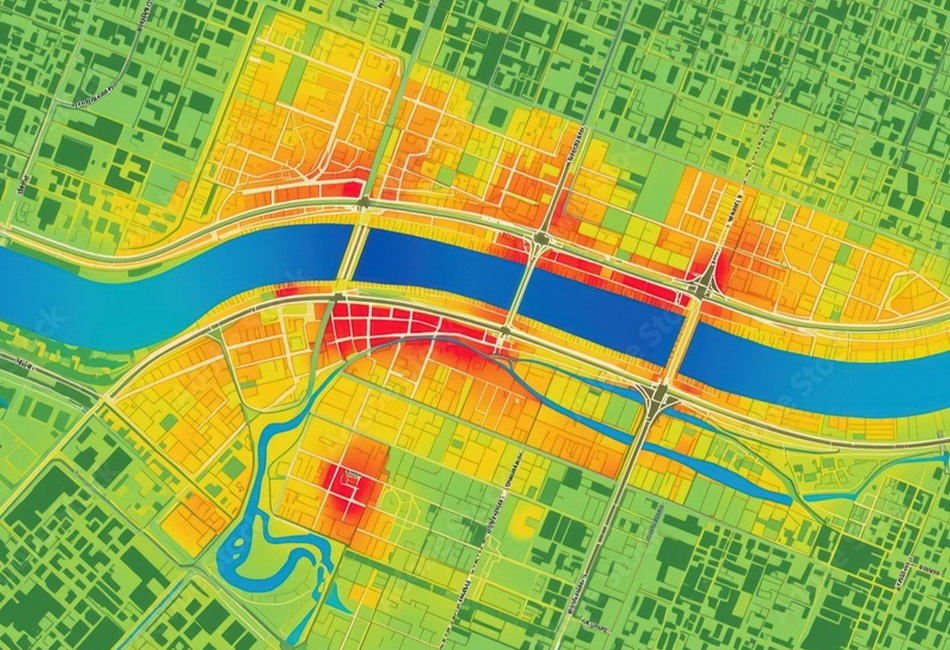
We produce trade area research that quantifies the retail opportunity in your community — household spending leakage, daytime population, competitive density, and the categories where your trade area is underserved relative to peer benchmarks. Whether the recruitment effort is in a Columbus suburb, a Cleveland-area submarket, a Cincinnati corridor, or a smaller community like Lorain or Hamilton, the deliverable is the proof package your team takes into retailer conversations, ICSC meetings, and developer pitches.
If your community is recruiting a specific retailer — a grocery anchor, a junior anchor, a category-defining tenant — we build a sales forecast that estimates what that retailer would actually do at a candidate site. We use the same gravity modeling methodology the major grocers and national retailers use internally, calibrated with field-verified competitive data. The forecast is the conversation-starter that moves a recruitment effort from speculative to qualified.

When a recruitment effort involves an incentive structure, the research has to hold up to scrutiny from council, stakeholders, and the retailer's own diligence team. We produce the trade area work, competitive analysis, and tenant performance forecasts that anchor those conversations — giving municipal leadership and their economic development partners the research grounding to evaluate retailer fit, negotiate from informed positions, and defend the recruitment thesis.
For larger redevelopment efforts, we work with municipalities to define a corridor or submarket strategy: which retail categories fit the trade area, what tenant mix would activate the corridor, and how the recruitment effort should be sequenced. The goal is to move from a wish list to a prioritized recruitment plan grounded in market reality.

Start the conversation →
Our research methodology is the same statewide, but the recruitment context varies meaningfully across Ohio. We support retail recruitment work in the major metros — Columbus, Cleveland, Cincinnati, Dayton, Toledo, and Akron — and in the mid-sized communities anchoring regional trade areas, including Canton, Youngstown, Lorain, and Hamilton. The work also extends into the growth-corridor suburbs that often drive a metro's net retail attraction story, and into smaller communities where a single anchor recruitment can reshape a downtown's economic trajectory.
In tier-one Ohio metros like Columbus and Cincinnati, recruitment efforts often center on specific corridors with multiple competing development opportunities. The research has to show which corridor and which co-tenancy story wins. In Cleveland and Akron, the work frequently involves repositioning legacy retail districts alongside new development. In Dayton, Toledo, and Canton, recruitment efforts often start with the question of whether a specific national retailer can succeed at all in the market — which requires field-verified competitive data, not just demographic projections. In communities like Lorain, Hamilton, and Youngstown, the trade area often extends well past municipal limits, and defining the real boundary is the work.
We have produced research across all of these contexts, and the methodology adjusts to the recruitment situation.
Ohio has one of the most sophisticated economic development ecosystems in the country, and most retail recruitment efforts engage at least one of the state's established economic development organizations. At the statewide level, JobsOhio coordinates business attraction across the six regional partners. In central Ohio, One Columbus leads economic development across the 11-county Columbus Region. Across northeast Ohio, Team NEO and the Greater Cleveland Partnership coordinate attraction work spanning Cleveland, Akron, Canton, and the broader 14- to 18-county region. REDI Cincinnati serves as the first point of contact for the 15-county Cincinnati region. The Dayton Development Coalition leads western Ohio, the Regional Growth Partnership coordinates northwest Ohio including Toledo and Lima, and Lake to River Economic Development supports the eastern Ohio corridor anchored by Youngstown.
Our work complements what those organizations do. The major Ohio EDAs are exceptional at attracting industrial, advanced manufacturing, life sciences, and corporate headquarters investment — those are the sectors their funding models and incentive structures are built around. Retail recruitment is a different category of work, with different research requirements and a different audience on the receiving end. Where municipalities and EDAs need specialized retail research, sales forecasting, or trade area validation to support a recruitment effort, we provide that layer.
Most municipal engagements with CRE360 happen in coordination with — not in place of — an existing EDA relationship. The deliverable supports the EDA's broader recruitment narrative and gives the municipal team a retail-specific research product they can take into conversations with national retailers, developers, and ICSC meetings.
Most municipal engagements start at one of two moments. The first is when a community has a specific retail prospect in active conversation and needs research to support the pitch — a grocer evaluating a site, a junior anchor weighing a corridor, a developer underwriting a project. The second is when a community is planning a longer-horizon recruitment effort and needs a market read before approaching retailers.
Either entry point works. We scope the engagement against the recruitment timeline, the specific retailers or categories in scope, and the audience for the deliverable. Reports designed for council presentation read differently than reports designed for retailer site committees, and we build to the use case.
Start the conversation →

As Business Development Director at CRE-360, Sarah applies a results-driven, collaborative approach to driving growth, strengthening client relationships, and expanding new business opportunities. Sarah brings 18+ years of diversified real estate experience. Holding an MRED from George Mason University and her broker licenses in both Virginia and Florida, she has led brokerage operations, managed multifamily and commercial assets, and supported national brands with market research, site selection, and leasing strategy.
© 2026 CRE360 Partners. All rights reserved.
.png)