Most retail real estate decisions get made on a combination of relationships, intuition, and whatever traffic data is currently in fashion. That works until it doesn't — and when it doesn't, the consequences are visible. Underperforming stores. Anchors lost without a plan. Municipalities that bet on the wrong tenant mix and end up with vacant pads.
CRE360 Partners produces independent retail market research for clients who can't afford to be wrong. We work in Ohio across all four major sub-markets — Toledo, Cleveland, Columbus, and Cincinnati — and across the secondary markets that don't make the headlines but matter just as much to the people putting capital at risk.

Retailers, landlords, and municipalities each have a version of the same question: will this work here? The honest answer almost never comes from the people whose interests align with the deal happening. Brokers want the deal. Landlords want the lease. Internal expansion teams want the store on the board. Independent research breaks that cycle by producing the answer the deal-makers actually need to hear, even when it's not the one they want.
In one recent engagement, we walked a developer back from an unviable grocery deal. The site was surrounded by existing stores from the same chain, and a relocation would have cannibalized two strong performers to prop up a weaker one. Instead of pushing the original tenant, the research identified two alternative grocers — Sprouts and Grocery Outlet — that fit the trade area's actual demand profile. Both are in active national growth mode: Sprouts and Grocery Outlet are among the grocers adding stores at the fastest pace nationally, with Sprouts alone planning more than 40 openings in 2026. The developer ended up with a stronger negotiating position and a more durable long-term asset.
That's the value of starting with the data and working forward, rather than starting with a preferred outcome and working backward.
Our methodology combines proprietary forecasting platforms with field-based market research. The platforms give us a starting point — population, demographics, traffic patterns, competitive density, trade area boundaries — but the real work happens in the markets themselves. We physically walk centers, evaluate co-tenancy, and validate the assumptions the data makes about how customers actually behave.
For grocery clients specifically, our sales forecasting work draws on a third-party platform used by 85–90% of major grocers. We've built models for stores that are now operating, and we've been within roughly 5% of actual sales on most of them. Grocery margins don't allow for much error, and the forecasting discipline reflects that.
The same rigor applies to non-grocery retail. We've built trade area analyses for tenants ranging from sub shops to specialty footwear, and our work supports landlord positioning, retailer expansion, and municipal retail recruitment efforts.
Our research informs every site decision our transaction team makes — which is part of why our Ohio rollout for a national retailer produced 13 LOIs in 9 months. See the full story.
Read the Full Case Study →
Ohio rewards research-driven decision-making more than most states. The four major metros each have their own retail dynamics — Columbus has been the growth story, Cleveland has been quietly reinventing itself, Cincinnati operates on its own logic, and Toledo punches above its weight in specific categories. Outside the major metros, you have markets like Grove City, Canton, and Dayton that consistently surprise retailers who haven't done the work.
Ohio has also historically been a test market for emerging retail concepts. The middle-market demographic profile makes it a strong proxy for national performance. If a concept works in Ohio, it tends to work elsewhere — which means the research signal coming out of Ohio is unusually transferable. The International Council of Shopping Centers maintains industry-wide benchmarks and research on the methodologies and patterns we apply at the market level.


Retailers expanding into Ohio use our work to validate sites before committing capital. Landlords use trade area analyses to attract anchor tenants and reposition struggling centers. Municipalities use our retail recruitment studies to make the case to national brands and justify economic development incentives.
Our research is independent of the transaction. We don't get paid more if the deal happens. That independence is the asset — it's what makes the work credible to the people on the other side of the table.
The earlier in the process, the better. We're most useful before a site is selected, before an anchor is recruited, before a municipality commits to a redevelopment strategy. Research that arrives after a decision has been made tends to confirm what people already wanted to believe. Research that arrives before tends to change outcomes.
If you're evaluating an Ohio market — for a single site, a portfolio, or a recruitment initiative — we should be a phone call early in your process.
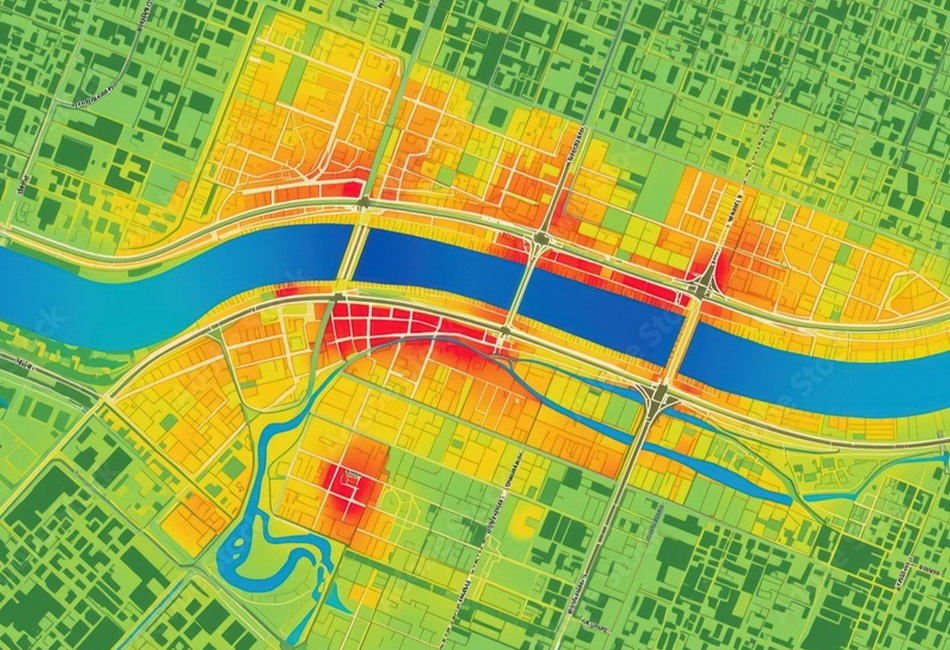
Whether it's a single site, a portfolio review, or a retail recruitment initiative, we'll bring the independent analysis you need to move with confidence.
Request a research conversation →

Kevin brings over 35 years of real estate research and site selection experience to the CRE 360 team. His expertise in the grocery industry began in college at Lucky Foods in Southern California. After earning a master’s degree, he joined American Stores in Buena Park, CA, as a Real Estate Research Analyst. Following the consolidation, he moved to Salt Lake City as a Senior Analyst. After American Stores was acquired by Albertsons, Kevin managed the Drug Store team in site research in Boise, ID. His REIT experience started in Houston, TX, with Weingarten Realty Investors, where he held positions as New Development Director and Director of Research during his nearly 17-year tenure. He later joined MTN Advisors, overseeing site location research for grocers and retailers. Throughout his career, Kevin has collaborated with grocers, shopping center owners, developers, and brokers to meet their research needs. At CRE 360 Partners, he leads a team of analysts to support clients in achieving growth. Kevin holds a master’s degree in Geography from California State University Long Beach and has been a member of the ICSC North American Research Group since 2017.
© 2026 CRE360 Partners. All rights reserved.
.png)