
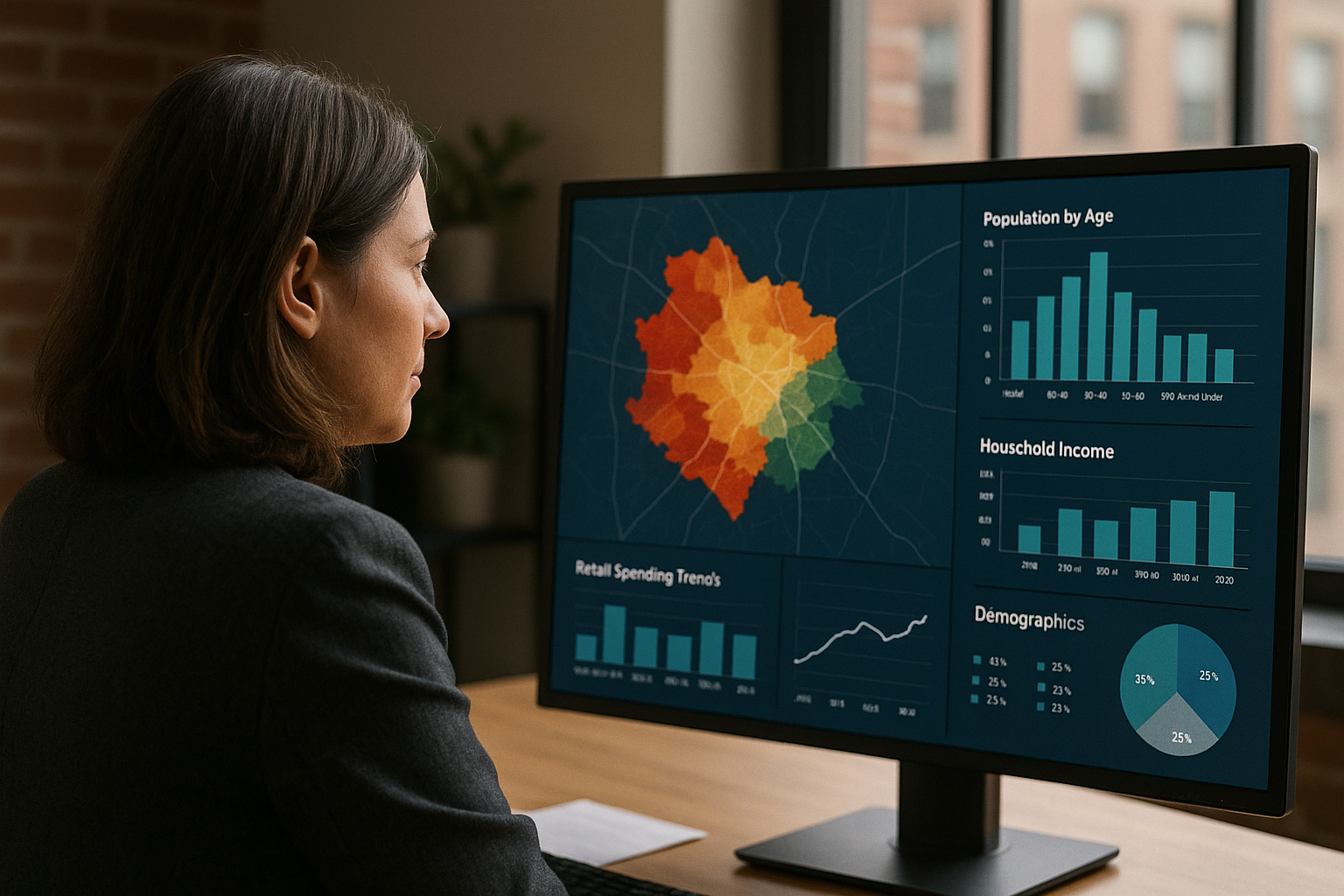
Retailers today are flooded with pitches from cities eager to secure new stores and centers. But what separates the contenders from the forgettable? Data.
While incentives might spark interest, they’re rarely enough to close the deal. National retailers want hard evidence that a location will perform. If your city can’t present a compelling, data-backed case for investment, another community will.
Here’s the essential data every municipality should be ready to share when speaking to retail decision-makers.
It’s not enough to say your population is growing. Retailers want to know who your residents are—and whether they match the profile of their target customer.
Key metrics to include:
Tip: Include 3–5 years of trend data to show whether these indicators are stable, growing, or in decline.
Retailers want to know what your residents buy—and how much they spend. This goes beyond demographics and directly into purchasing behavior.
What to show:
If you can demonstrate that your residents outspend the average in key categories, you’ve given a retailer a reason to take a closer look.
Your city limits aren’t your only market. Retailers need to understand the real trade area—a mix of drive times, shopper behavior, and competitive pull.
What to include:
A retailer’s site selection team will do this work anyway—beat them to it and show you’re prepared.
Visibility and access remain critical. Retailers want to know how many people pass by—and how they get there.
Include:
If you can show seasonality (such as tourism surges) or peak events that drive traffic, include those as well.
This is one of the clearest ways to highlight opportunity. Where are residents spending money outside your city that could be captured locally?
Provide:
When a retailer sees a clear unmet need, it reframes your city as a profit center—not just a place on a map.
Retailers want to know who’s already in the market—and whether there’s room to compete or complement.
Be ready to share:
Visuals are powerful here. Heat maps, dashboards, or simple graphic summaries go a long way.
A retailer may love your market—but if there’s no shovel-ready site or the permitting process drags on, it’s a lost cause.
Highlight:
Fast-track potential and site readiness can be just as compelling as demographics.
Data may win the meeting, but alignment with local values can help close the deal. Retailers want to know they’ll be welcomed—not resented.
Share:
Even a one-page summary here can demonstrate retail isn’t just a city priority—it’s a shared community vision.
Retail recruitment is no longer about the biggest incentive package. It’s about being the best-prepared, most insightful, and lowest-risk choice.
When your team shows up with clean, credible, and contextualized data, you’re not just asking for investment—you’re making a business case that’s hard to ignore.
Need help packaging your city’s data into a compelling retail pitch?
Schedule a Strategy Consultation with CRE 360 — we’ll help you turn local strengths into national interest.
Stay informed with our expert articles and resources.

May 13, 2026
Kevin Bissell
This article breaks down what city planners and economic development teams need to know about defining and using trade area data.
Read More
.svg)

May 13, 2026
Kevin Bissell
Discover how to attract retailers by building a compelling, data-driven narrative.
Read More
May 13, 2026
Kevin Bissell
How secondary cities can compete more effectively for retail
Read More
© 2026 CRE360 Partners. All rights reserved.
.png)
